As Amazon Associates, we earn from qualifying purchases. This means we may receive a small commission at no extra cost to you if you click through and make a purchase.
Maintaining clean flooring across a creator workspace, video studio, or dedicated maker environment is a continuous struggle against stray materials. Dropped gaffer tape scraps, 3D printing filament snips, sawdust from set building, lens cleaning tissue lint, and tracked-in pet hair gather around delicate gear and lighting stands. When shopping for a rumba robotic vacuum cleaner, independent media producers and active hobbyists require automated floor maintenance that operates autonomously without snagging loose charging cables, colliding with tripods, or demanding constant hands-on intervention. Selecting an automated vacuum involves matching suction capacity against navigation precision and mopping convenience, ensuring your studio floor remains presentable for video shoots while preserving your daily creative workflow.
The modern Roomba lineup addresses these environmental demands by organizing models into distinct tiers of dock automation, brush engineering, and sensor navigation. Rather than a uniform set of features across the catalog, the brand divides its current hardware into dedicated dry-vacuum specialists and advanced roomba combo vacuum and mop units. Entry-level and mid-range choices leverage self-emptying docks holding between 75 and 90 days of debris, relying on ClearView LiDAR or obstacle-trained computer vision to map workspaces. Higher-tier units introduce AutoWash docks that empty dry matter, wash spinning mopping pads, and apply heated air drying to prevent musty smells. Reviewing this roomba robot vacuum comparison reveals which roomba robot vacuum to buy based on your workspace floor surfaces, cable density, and tolerance for manual maintenance.
This guide by the numbers
4.9/5
Best rated model
Highest buyer average in this line-up, as left by Amazon shoppers
6
Models on file
Models in this guide that have a stored product record
1
Brand involved
Distinct brand names on the product records used here
Figures come from the stored Amazon listing data for the products in this article. Ratings are buyer averages, not scores given by this site.
Roomba Robot Vacuums Lineup at a Glance
| Model | Primary Function | Dock Capability | Navigation System |
|---|---|---|---|
| iRobot Roomba 105 Combo Robot Vacuum | Vacuum & Mop | 75-day AutoEmpty | ClearView LiDAR |
| iRobot Roomba Max 715 Pet Robot | Vacuum Only | 90-day AutoEmpty (AllergenLock) | ClearView Pro LiDAR & PrecisionVision AI |
| iRobot Roomba 105X Robot Vacuum & | Vacuum & Mop | 75-day AutoEmpty | ClearView LiDAR |
| iRobot Roomba 505X Robot Vacuum & | Vacuum & Mop | 75-day AutoWash (Empty, Wash, Heat-Dry) | ClearView Pro LiDAR & PrecisionVision AI |
| iRobot Roomba Plus 505 Combo Robot | Vacuum & Mop | 75-day AutoWash (Empty, Wash, Heat-Dry) | ClearView Pro LiDAR & PrecisionVision AI |
| iRobot Roomba j7+ Self-Emptying Vacuum Cleaning | Vacuum Only | Clean Base Self-Emptying | PrecisionVision Navigation |
The Models in Detail
01
iRobot Roomba 105 Combo Robot Vacuum

iRobot Roomba 105 Combo Robot Vacuum
Best for: Creators wanting affordable hybrid wet and dry cleaning
Pros
- 75-day AutoEmpty dock
- ClearView LiDAR mapping
- Automatic carpet avoidance
Cons
- Manual mop pad washing
- 100-minute battery life
The iRobot Roomba 105 Combo Robot Vacuum provides balanced wet and dry floor care tailored for small to medium creator spaces. Built with a 4-stage cleaning architecture, it pairs 70X power-lifting suction with a multi-surface main brush and an edge-sweeping brush calibrated for 20% improved corner pickup. For wet jobs, an integrated micro-pump distributes water across a reusable microfiber mopping pad, featuring a SmartScrub mode that applies 2x deeper scrubbing to remove dried studio spills. It uses ClearView LiDAR navigation to map floor plans rapidly, moving along structured paths while cliff sensors prevent accidental falls near stairs or lowered mezzanine levels. The chassis features a disc-shaped form factor finished in Smoke, operating across seven distinct power levels on a 100-minute lithium-ion battery run.
Debris evacuation is handled by an AutoEmpty dock equipped with a sealed bag that traps 99% of allergens down to 0.7 microns, containing studio dirt for up to 75 days before requiring replacement. When navigating across mixed flooring, the robot detects carpets and avoids them while mopping, keeping area rugs and backdrop fabrics completely dry without demanding manual boundary drawing. Users can tailor operations through the Roomba Home app by adjusting suction intensities, mopping fluid volume, and designated keep-out zones around fragile production equipment. While some creators consider low-clearance alternatives like a eufy slim robot vacuum for low shelving, this unit delivers a more complete hybrid wet-and-dry floor care platform.
This model suits content creators and remote workers managing open-plan studio rooms with sealed hard floors and scattered area rugs who need dependable automated mopping. However, it gives way to the 505 series if you demand motorized mop washing, or to the Max 715 if your environment contains heavy pet hair and thick carpeting.
02
iRobot Roomba Max 715 Pet Robot

iRobot Roomba Max 715 Pet Robot
Best for: Pet-heavy carpeted studios demanding maximum suction
Pros
- 30000Pa intense suction
- PrecisionVision AI avoidance
- 90-day odor-control dock
Cons
- No wet mopping feature
- Larger base footprint
The iRobot Roomba Max 715 Pet Robot focuses squarely on aggressive dry debris extraction. Built with a 30,000Pa suction motor and patented anti-tangle Dual Rubber Brushes, this model is engineered to pull pet fur, paper scraps, and coarse grit from deep within carpet piles without wrapping hair around the rollers. An upgraded anti-tangle edge-sweeping brush reaches deep along studio baseboards and studio flat walls, providing 20% better edge clearance than earlier designs. Carpet Boost functionality detects soft flooring automatically and throttles suction to maximum power. The machine operates on a 120-minute lithium-ion battery, sporting a round black chassis supported by corded electric base station charging.
Autonomous navigation is driven by ClearView Pro LiDAR, which builds comprehensive 3D workspace maps that operate reliably in bright daytime lighting or completely dark studio conditions. Supplementing the laser mapping is PrecisionVision AI, an onboard obstacle recognition system that identifies and steers clear of studio cables, stray socks, shoes, pet toys, pet water bowls, and pet waste. Advanced Dirt Detect sensors spot high-traffic mess concentrations, automatically ordering the robot to execute repeated passes over dirty zones. Those evaluating automated studio cleaners against competitive lines like a shark robotic vacuum cleaner will appreciate the dedicated odor-control AllergenLock bags in the AutoEmpty dock, which store collected debris for up to 90 days.
This platform serves as the best roomba for workspace debris for pet owners, digital fabricators, and creators who produce excessive dry shop clutter and work in carpeted or heavily rugged rooms. It yields ground to the Roomba 105 and 505 series if your workflow leaves sticky spills that require wet floor wiping.
03
iRobot Roomba 105X Robot Vacuum &

iRobot Roomba 105X Robot Vacuum &
Best for: Workspaces needing neat row cleaning in dark rooms
Pros
- Simultaneous vacuum and mop
- SmartScrub micro-pump
- Allergen-sealed dock bag
Cons
- Pad requires manual laundering
- 100-minute run time
The iRobot Roomba 105X Robot Vacuum & functions as a dependable hybrid system engineered to clean hard floors and rugs in a single continuous pass. Powered by 70X power-lifting suction, it incorporates a 3-stage cleaning system that integrates a multi-surface roller, a specialized edge-sweeping brush, and a built-in microfiber mop pad. The onboard SmartScrub system utilizes an internal micro-pump to keep the pad uniformly damp, effectively lifting sticky floor stains, dried coffee spots, and tracked-in workshop dirt. Physical specifications detail a compact cubic-classified form factor measuring 13.2 inches long by 13.2 inches wide and 4.1 inches high, powered by a 100-minute lithium-ion battery array.
ClearView LiDAR guidance maps workspaces in straight, efficient parallel rows, preventing redundant passes and avoiding missed studio corners. The navigation setup navigates around general furniture and perimeter obstacles in low light without getting stranded during off-hours automated cleaning. Integrated carpet detection sensors keep the wet mopping pad off rugs automatically, eliminating the need to set up software barriers before starting a cleaning cycle. Debris is evacuated into an AutoEmpty dock containing a sealed allergen bag that stores dirt for up to 75 days while filtering 99% of 0.7-micron particulates.
This unit is an ideal match for craft hobbyists and busy creators who want a straightforward, set-and-forget hybrid machine that addresses light spills and daily dust. It gives way to the 505X model when edge-to-edge scrubbing coverage and self-washing mop pads are mandatory.
04
iRobot Roomba 505X Robot Vacuum &
iRobot Roomba 505X Robot Vacuum &
Best for: Hands-off studio maintenance with automatic pad washing
Pros
- AutoWash dock with heat drying
- DualClean PerfectEdge mop pads
- Auto-lifting carpet pads
Cons
- Water reservoir maintenance
- Higher dock spatial profile
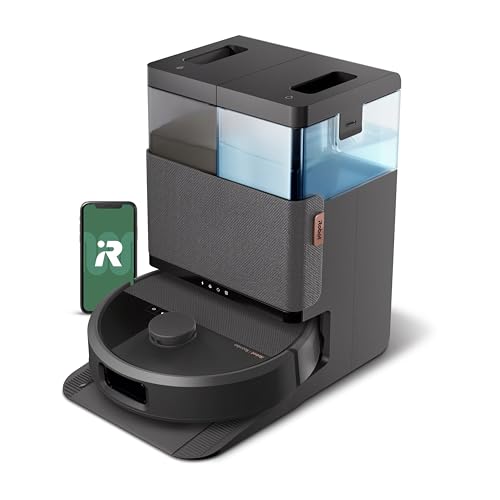
The iRobot Roomba 505X Robot Vacuum & significantly elevates automated cleaning by pairing high suction with an all-in-one maintenance dock. Operating with 70X stronger suction, the unit deploys spinning DualClean mop pads built with PerfectEdge technology, enabling the pads to extend outwards along walls and studio partitions to achieve 18% greater floor coverage than conventional robot mop formats. When confronting stubborn messes such as dried beverages or muddy floor tracks, SmartScrub applies targeted physical pressure to break down residue. The vacuum features a 120-minute lithium-ion battery, anti-fall sensors, and an eco-mode profile.
The centerpiece of this setup is the AutoWash Dock, which empties dry debris for up to 75 days, washes the mop pads automatically, and dries them with heated air to eliminate bacterial growth and damp odors. This automated dock architecture delivers up to 4 weeks of hands-off mopping without manual pad rinsing. Spatial mapping is coordinated by ClearView Pro LiDAR alongside PrecisionVision AI, which identifies floor hazards such as microphone cables, dropped power cords, and pet messes, while actively recognizing wet spots to initiate repeat cleaning passes. When transitioning onto rugs, the mop pads lift completely clear of carpet fibers, maintaining dry rugs during continuous operations.
This model is built for intensive multimedia creators, photographers, and pet owners whose workspaces endure continuous foot traffic and frequent floor splatters requiring regular wet maintenance. It defers to the standard 105 series if your budget demands a simpler base station with a smaller spatial footprint.
05
iRobot Roomba Plus 505 Combo Robot
Best for: High-traffic creative workspaces needing self-cleaning mopping
Pros
- AutoWash dock pad washing
- Dirt data prioritization
- PrecisionVision AI navigation
Cons
- Requires clean water refills
- Heavier docking equipment
The iRobot Roomba Plus 505 Combo Robot provides identical flagship floor-scrubbing capabilities paired with an intelligent dirt-tracking software interface. Delivering 70x power-lifting suction alongside Carpet Boost, it integrates a multi-surface rubber brush, an edge-sweeping brush, and spinning DualClean mop pads that extend into tight corners via PerfectEdge design. SmartScrub delivers 2x deeper scrubbing against ground-in grime. The robot houses a 0.5-liter internal capacity, is powered by a 120-minute lithium-ion battery operating on a 120-volt charging base, and sports a black round chassis designed for complex interior studio environments.
Its AutoWash Dock manages comprehensive system upkeep: it holds dry debris for up to 75 days, cleans the mopping pads, continuously refreshes fluid, and heat-dries the fabric to keep the workspace sanitary. Onboard ClearView Pro LiDAR establishes accurate room maps, while PrecisionVision AI spots and circumnavigates charging cables, loose socks, and pet accidents. The Roomba Home app tracks historical dirt data, identifying which zones of your workspace soil the fastest, automatically prioritizing these areas and configuring suction and scrubbing intensity without requiring manual schedules.
This configuration suits dedicated video production facilities and makerspaces that generate continuous mixed messes and require true zero-maintenance floor washing. It yields precedence to the Roomba Max 715 if your environment is fully carpeted and has no need for motorized water delivery or pad washing hardware.
06
iRobot Roomba j7+ Self-Emptying Vacuum Cleaning
Best for: Cable-dense editing suites needing proven cord avoidance
Pros
- PrecisionVision cord avoidance
- Clean Base self-emptying
- Dual anti-tangle rubber rollers
Cons
- Lower 10x suction baseline
- Renewed hardware condition
The iRobot Roomba j7+ Self-Emptying Vacuum Cleaning robot is a dedicated dry-vacuum platform supplied through Amazon Renewed. Governed by iRobot OS, this machine relies on front-facing PrecisionVision Navigation, specifically trained via machine learning algorithms to spot, identify, and swerve around floor-level studio hazards like camera power supplies, dropped charging cables, stray shoes, and pet waste. Imprint Smart Mapping provides granular room-by-room scheduling, allowing users to designate precise clean zones around editing desks while establishing keep-out barriers around lighting grids and backdrop c-stands. It is recommended for hard floors, runs for up to 2 hours per charge, and integrates with Amazon Echo voice ecosystems.
Floor pickup utilizes a 3-stage cleaning system driven by 10x Power-Lifting Suction paired with dual multi-surface rubber brushes that stay free of pet fur and studio threading. Once cleaning is finished, the robot returns to its Clean Base Self-Emptying dock, which suctions the internal bin clean into an enclosed disposal bag, offering weeks of hands-free operation without raising dust clouds. Operating on two main drive wheels, its low-profile disc body easily maneuvers underneath standard editing desks, equipment storage racks, and gear cases.
This model is an exceptional match for video editors, audio engineers, and tech creators operating in cable-dense workspaces who prioritize rock-solid obstacle avoidance above all else. It steps aside for the Roomba Max 715 when carpet cleaning calls for higher suction power, or for the Combo lines when wet mopping is required.
Matching a Model to Your Setup
- For cable-heavy editing suites and video bays where dropped power cords, microphone cables, and light stands create obstacle courses, the iRobot Roomba j7+ Self-Emptying Vacuum Cleaning provides battle-tested PrecisionVision object avoidance.
- For busy mixed-media art rooms and studio kitchens with hard tile or polished concrete that encounter paint drops and coffee splatters, the iRobot Roomba 505X Robot Vacuum & handles deep scrubbing with fully automated pad washing and heat drying.
- For high-shedding multi-pet studio environments with dense area rugs and wool carpets, the iRobot Roomba Max 715 Pet Robot offers an industry-leading 30,000Pa suction motor and odor-neutralizing allergen dock bags.
- For content creators needing routine wet-and-dry floor upkeep on a budget without complex dock plumbing, the iRobot Roomba 105 Combo Robot Vacuum offers dependable LiDAR mapping and automated carpet avoidance.
- For commercial live-work workspaces with extensive baseboard runs that demand edge-to-edge mopping and automated room prioritization, the iRobot Roomba Plus 505 Combo Robot excels with its extending PerfectEdge spinning pads.
Before You Buy
Before purchasing an automated floor cleaner for an active creative studio or home workspace, examine the infrastructure requirements that product listings omit. The self-emptying base stations require considerable clear wall space to allow the robots to dock and align without radio interference. Furthermore, the evacuation cycle on AutoEmpty and AutoWash docks produces a loud, high-decibel suction blast for 15 to 20 seconds. If you record live dialogue, podcasts, or streaming audio, schedule cleaning cycles during production breaks to avoid ruining takes. Additionally, while the 505 series features self-washing docks, the product specifications do not state the exact physical dimensions of the dock clean and dirty water reservoirs, meaning you should prepare to manually refill clean water and discard waste water every few weeks depending on your mopping schedule.
Routine consumable maintenance also demands planning. While docks store debris for 75 to 90 days, AllergenLock and AutoEmpty bags are disposable consumables that require ongoing replenishment. Microfiber mopping pads on the 105 and 105X models must be manually detached, hand-rinsed, or run through laundry machines after wet cleaning runs to prevent mildew, whereas the automated pad wash on the 505 units handles rinsing but still requires eventual pad fabric replacement. Finally, although PrecisionVision AI reliably identifies cords, shoes, and pet waste, listings do not claim immunity against thin, transparent fishing line, loose backdrop ribbons, or micro-gauge camera tether cables, meaning basic studio cable hygiene remains necessary before launching clean runs.
FAQ
How does a Roomba combo vacuum and mop avoid soaking area rugs?
Models like the iRobot Roomba 105 Combo use built-in carpet detection sensors to identify changes in floor texture. When a rug is sensed during a mopping cycle, the robot turns away to keep the fabric dry. On advanced platforms like the Roomba 505X and Plus 505, the spinning mop pads physically lift upwards when crossing over carpets, allowing the vacuum rollers to clean rugs while keeping wet pad fibers elevated.
Can Roomba AI obstacle avoidance detect thin camera and microphone cables?
Models equipped with PrecisionVision AI, including the Roomba Max 715, Roomba 505X, Roomba Plus 505, and Roomba j7+, are trained to recognize standard electrical cables, charging cords, and socks. However, ultra-thin studio wiring like lavalier microphone cords, uncoiled guitar strings, or clear monofilament wire may not present sufficient visual contrast for the camera to register reliably, so creators should bundle small wires off the floor.
How often do the self-emptying docks need maintenance?
The AutoEmpty docks store dry dust and debris for up to 75 to 90 days depending on the model and volume of workspace shedding. Once full, the sealed internal bag is lifted out and discarded without releasing dust into the room. Models with AutoWash docks require additional weekly to bi-weekly attention to replenish clean water tanks, empty dirty wastewater reservoirs, and check dock wash trays for sediment buildup.
What is the difference between ClearView LiDAR and PrecisionVision AI?
ClearView LiDAR uses a spinning laser turret to map the physical geometry of walls, furniture, and rooms in straight lines, functioning identically in pitch-black rooms and bright sun. PrecisionVision AI uses an optical camera and onboard machine learning models to identify specific household objects like shoes, cables, pet bowls, and pet waste, steering around them rather than pushing through them.
Can Roomba robotic vacuums operate in dark studio settings?
Units that rely primarily on ClearView LiDAR, such as the Roomba 105, 105X, and the LiDAR systems in the Max 715 and 505 series, map and navigate effortlessly in completely dark rooms. Purely optical camera-based systems may require minimal ambient studio illumination to distinguish small floor obstacles, though models like the j7+ include front-facing tracking lights to aid object detection in dim environments.