
As Amazon Associates, we earn from qualifying purchases. This means we may receive a small commission at no extra cost to you if you click through and make a purchase.
Managing ambient moisture in a creative studio, gear storage locker, or subterranean workshop is vital when protecting valuable audio electronics, sensitive optical equipment, camera lenses, and fine tonewood instruments. High ambient relative humidity breeds optical fungus, corrodes delicate solder points, and swells wooden frames, making a reliable dehumidification system a foundational studio investment. When choosing the right workhorse, shoppers frequently weigh daily condensation removal volume, internal reservoir capacity, physical footprint, acoustic interference, and drainage mechanics. Deciding between a standard reservoir-drained unit and a dedicated pump system comes down to your floor plan: whether your space permits gravity drainage to a low floor drain, or demands active mechanical lift to pump water upward into an elevated sink, sump basin, or basement egress window.
The lineup presented across these listings provides distinct functional tiers tailored to varied operational environments. Entry and mid-tier residential models emphasize balanced airflow, smart sensor-based automated cycling, and integrated vertical pumps designed to elevate condensation between ten and fifteen vertical feet. Advanced platforms introduce Wi-Fi connectivity, app-driven scheduling, and expanded coverage ratings reaching up to 7,000 square feet for high-volume moisture extraction. By comparing compressor ratings, water tank volumes, bundled tubing accessories, and acoustic output levels, you can identify which machine aligns seamlessly with your creative workflow and production space.
This guide by the numbers
9.2/10
Best rated model
Our highest score in this line-up
6
Models on file
Models in this guide that have a stored product record
6
Brands involved
Distinct brand names on the product records used here
Prices and specifications come from the stored Amazon listing data for the products in this article. Scores are out of 10, based on listed specifications and buyer feedback.
GE Dehumidifier Lineup at a Glance
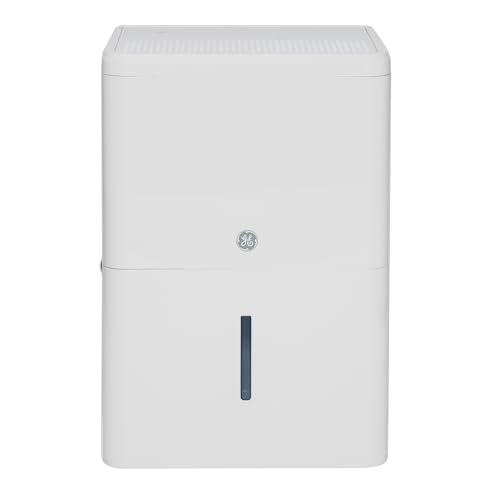
GE Dehumidifier with Pump & Hose
Best for: Sub-grade studios needing continuous vertical lift
Pros
- 15-foot vertical pump lift
- Included 16-foot drain hose
- Smart Dry automatic fan adjustment
Cons
- Small 15-pint internal bucket
- Heavier 44-pound dry weight
| Model | Daily Capacity | Coverage Area | Tank Volume | Drainage Lift Method |
|---|---|---|---|---|
| GE Dehumidifier with Pump & Hose | 50 pints/day | 5,000 sq ft | 15 pints | Built-in pump with 15 ft vertical lift |
| Hisense 50-Pint Lift-Up Portable Dehumidifier | 50 pints/day | 4,500 sq ft | 50 pints | Built-in pump with quick-connect line |
| Midea 4,500 Sq. Ft. Dehumidifier | 50 pints/day | 4,500 sq ft | 1.6 gallons | Integrated pump for vertical and horizontal discharge |
| Frigidaire 50 Pint Dehumidifier w Wifi | 50 pints/day | 4,500 sq ft | 2.7 gallons | Continuous drain outlet (gravity port) |
| Waykar 150 Pint Commercial Dehumidifier | 150 pints/day (at 95°F, 90% RH) | 7,000 sq ft | 1.85 gallons | Built-in pump with 9.84 ft vertical lift |
| avylo Dehumidifier for Basement with Pump | 90 pints/day (at 90°F, 90% RH) | 4,500 sq ft | 2.11 gallons | Built-in pump with 15 ft vertical lift |
The Models in Detail
01
GE Dehumidifier with Pump & Hose
The GE Dehumidifier with Pump & Hose is built specifically for damp below-grade locations where floor-level gravity drainage is physically impossible. Rated to extract 50 pints per day across environments measuring up to 5,000 square feet, this unit resolves chronic dampness that threatens production gear. Its integrated mechanical pump can drive collected condensate up to 15 vertical feet through the supplied 16-foot drain hose, allowing creators to route drainage up toward elevated basement windows, laundry basins, or overhead waste stacks without ever hauling a collection bucket. When operating away from continuous drainage lines, the machine catches water in an internal 15-pint bucket backed by a ten-second audible alert that warns you when the reservoir requires attention or is misaligned.
For workflow automation, this ge 50 pint dehumidifier with pump features Smart Dry technology that monitors ambient conditions and automatically regulates its three-speed fan. By adjusting fan velocity against target relative humidity between 30% and 70%, the ge smart dry dehumidifier system curtails unnecessary compressor cycles and reduces power draw while maintaining stable air conditions for sensitive gear. The physical build weighs 44 pounds and measures 11.4 inches deep by 14.4 inches wide by 24.1 inches high, riding on integrated smooth-rolling casters and recessed pocket handles. A washable air filter catches airborne lint and dust, ensuring the internal evaporator coils remain clean during prolonged unattended basement operations.
This ge dehumidifier with pump and hose suits media creators and hobbyists managing damp basement edit suites, dedicated voiceover booths, or subterranean equipment lockers that lack floor drains. It delivers dependable vertical discharge alongside precise digital humidistat controls. It yields priority to higher-capacity commercial units only when floor area exceeds 5,000 square feet or when heavy structural water intrusion requires more aggressive continuous volumetric throughput.
02
Hisense 50-Pint Lift-Up Portable Dehumidifier

Hisense 50-Pint Lift-Up Portable Dehumidifier
Best for: Cold gear basements running continuous drainage
Pros
- Low-temp operation down to 38°F
- Built-in pump with quick-connect hose
- Large 50-pint reservoir capacity
Cons
- Listing lacks lift height spec
The Hisense 50-Pint Lift-Up Portable Dehumidifier delivers continuous moisture management tailored for large spaces up to 4,500 square feet. Built with an internal mechanical pump and an included quick-connect hose, it pushes water out to sinks or windows to sustain unattended operation around the clock. The machine features three distinct operating programs: Auto mode responds directly to shifting moisture levels, Continuous mode runs the compressor without interruption to tackle severe dampness, and Manual mode lets users configure exact parameters. Three selectable fan speeds—High, Low, and Auto—allow users to dial back acoustic noise during recording sessions or ramp up airflow when rapid drying is required.
A key strength for unheated ground-floor workshops, editing garages, and cold basements is its low-temperature operating floor down to 38 degrees Fahrenheit. Built-in freeze protection keeps the compressor and coils functioning in chilly environments where competing units freeze over. The unit features a substantial 50-pint internal tank volume alongside an external water level indicator, an Energy Star certified efficiency profile, and smooth rolling wheels. It measures 10.7 inches deep by 15.1 inches wide by 24.8 inches high and weighs 40.3 pounds, finished in a dark modern chassis suited for creative environments.
This model is ideal for garage studio creators and cold-climate basement tinkerers who require cold-weather resilience down into the 30s. The listing does not specify maximum vertical pump lift height, so creators needing confirmed vertical discharge beyond standard counter height may prefer the explicitly rated 15-foot lift found on the GE system.
03
Midea 4,500 Sq. Ft. Dehumidifier

Midea 4,500 Sq. Ft. Dehumidifier
Best for: Noise-sensitive audio spaces wanting app automation
Pros
- Quiet 47 dBA operation
- Wi-Fi app and voice control
- Continuous vertical and horizontal pumping
Cons
- Standard drain hose not included
- Only two fan speeds
The Midea 4,500 Sq. Ft. Dehumidifier targets noise-sensitive creative workstations, vocal tracking booths, and mixed-use media rooms by delivering a low operational acoustic profile rated at 47 dBA. Rated for 50 pints of moisture extraction per day across rooms up to 4,500 square feet, the unit keeps relative humidity within the ideal 45% to 55% comfort zone across an adjustable range spanning 35% to 85%. It features a built-in water pump designed to discharge condensate vertically or horizontally into an elevated sink or open window, ending reliance on its 1.6-gallon internal bucket.
In addition to physical digital buttons, the platform incorporates smart Wi-Fi connectivity managed via the SmartHome mobile application on iOS and Android devices, alongside Google Assistant and Amazon Alexa voice command integration. This connected functionality allows podcasters and studio managers to toggle modes, monitor humidity levels, and schedule runtimes directly from an audio desk without stepping into the utility closet. The machine pushes 218 CFM of airflow using a 515-watt power supply, rolls on 360-degree casters, and includes a washable intake filter. If you are comparing versatile mid-sized options across brands, reviewing a tcl dehumidifier with pump can provide valuable context on alternative portable pump designs.
Creators prioritizing low noise and smart studio automation will appreciate Midea’s smartphone integration and whisper-quiet 47 dBA operation. However, those needing a bundled gravity hose must supply their own, as the listing notes a standard garden hose for the auxiliary gravity port is not included.
04
Frigidaire 50 Pint Dehumidifier w Wifi

Frigidaire 50 Pint Dehumidifier w Wifi
Best for: High-airflow rooms using gravity continuous drainage
Pros
- High 235 CFM airflow
- Large 2.7-gallon bucket
- Washable dust filter design
Cons
- No pump hose included
- Listing does not specify lift
The Frigidaire 50 Pint Dehumidifier w Wifi provides continuous moisture extraction for areas up to 4,500 square feet, pulling up to 50 pints of water per day from surrounding air. Moving 235 CFM of air with a 470-watt motor, it creates active circulation across gear storage facilities, keeping stale air from settling around delicate electronic components. The physical layout utilizes a front-loading bucket with an integrated carrying handle and splash guard, boasting a generous 2.7-gallon storage capacity that reduces manual dump intervals during standalone operation.
The unit features three fan speeds, programmable automated timers, and custom humidity level controls to keep moisture within specific bounds. A washable filter slides out easily from the front, trapping ambient dust particles to protect internal heat exchangers from choking. At 44.5 pounds and measuring 12.19 inches deep by 24.25 inches wide by 24.25 inches high, this wider-profile machine maintains sturdy floor contact during heavy circulation cycles.
This model suits production studios with direct access to a dedicated floor drain where gravity-based 50 pint dehumidifier continuous drain setups operate without hindrance. Because the listing does not specify an internal mechanical lift pump or a bundled discharge hose, creators with sub-grade egress windows must look to dedicated pump platforms instead.
05
Waykar 150 Pint Commercial Dehumidifier
Best for: Expansive workshops with extreme moisture loads
Pros
- High 150-pint maximum capacity
- Built-in pump with 9.84-foot lift
- Oscillating auto-swing air distribution
Cons
- Higher 520-watt power draw
- Coverage limited above 90°F
The Waykar 150 Pint Commercial Dehumidifier steps well beyond standard domestic appliances, designed specifically for expansive 7,000-square-foot workspaces, large film soundstages, and industrial studio basements. Under warm test conditions of 95 degrees Fahrenheit and 90% relative humidity, its commercial compressor extracts up to 150 pints (18.75 gallons) of water per day. It features a built-in vertical condensate pump capable of elevating water up to 9.84 feet, supported by three drainage pathways including an included drain hose and a 1.85-gallon internal tank with automatic shutoff sensors.
Air distribution is reinforced by an automatic motorized swing louver that disperses treated air evenly across vast open rooms, eliminating dead humidity zones where mold could take hold behind backdrops or sound acoustic panels. Operating at 520 watts with a 212 CFM blower, the machine integrates auto-defrost, a self-drying coil mode, and intelligent touch panel controls with ambient digital readouts between 30% and 80% humidity. For editors weighing high-output gear rooms against standard footprints, exploring our dedicated waykar dehumidifier with pump guide highlights how commercial ratings perform under prolonged load.
This high-output platform is tailor-made for expansive commercial workshops and severe moisture environments where standard 50-pint machines fall short. It yields to smaller portable platforms when studio power consumption, floor footprint, and 15-foot vertical lift requirements take precedence.
06
avylo Dehumidifier for Basement with Pump
Best for: Creators seeking silent, energy-efficient moisture management
Pros
- Ultra-quiet 41 dB sound level
- 15-foot pump lift with hose
- Low 235-watt power consumption
Cons
- Horizontal footprint requires floor space
The avylo Dehumidifier for Basement with Pump focuses on extreme acoustic dampening and high energy efficiency, operating at an exceptionally quiet 41 dB. This near-silent acoustic performance makes it an outstanding candidate for home recording studios, editing suites, and live streaming rooms where mechanical buzz ruins microphone tracks. The unit achieves an Energy Star Most Efficient 2025 rating with an EER of 2.05 L/kWh, drawing only 235 watts of power while extracting up to 90 pints per day under high-humidity conditions (90 degrees Fahrenheit and 90% RH) across 4,500 square feet.
Drainage versatility is central to the design: the unit incorporates a 15-foot vertical lift pump paired with an included 15-foot drain hose, allowing effortless overhead routing to distant utility drains. For localized collection, it sports a top-mounted 2.11-gallon tank featuring full-tank alerts and automated overflow cutoff switches. The digital control interface includes key sound and light deactivation modes for total darkness during production shoots, alongside child locks, a 24-hour timer, and multi-stage thermal compressor protection. For larger structural basements, comparing this system alongside a heavy-duty whirlpool dehumidifier for basement setup helps clarify residential footprint trade-offs.
This unit is exceptionally well suited for sound editors, vloggers, and content creators working in small-to-medium creative rooms where continuous automated vertical drainage and whisper-quiet noise floors are paramount. It gives way to heavier industrial units only when heating above its 120-degree upper operating ceiling or when clearing cavernous multi-room facilities exceeding 4,500 square feet.
Matching a Model to Your Setup
- Below-grade studio requiring high vertical drainage: Select the GE Dehumidifier with Pump & Hose to push condensate up 15 vertical feet through its included 16-foot hose directly into an egress window or overhead pipe.
- Live vocal tracking room or podcast studio: Choose the avylo Dehumidifier for Basement with Pump for its ultra-quiet 41 dB operation, display light shut-off switch, and 15-foot pump lift.
- Cold garage production workshop: Choose the Hisense 50-Pint Lift-Up Portable Dehumidifier to leverage its 38-degree Fahrenheit low-temperature operational rating and built-in pump.
- Connected smart home media suite: Pick the Midea 4,500 Sq. Ft. Dehumidifier to manage schedules, humidistat thresholds, and voice automation via Wi-Fi and voice assistants.
- Cavernous commercial warehouse or high-load set: Deploy the Waykar 150 Pint Commercial Dehumidifier to tackle up to 7,000 square feet with oscillating motorized airflow and commercial moisture removal.
- Floor-drain utility closet: Run the Frigidaire 50 Pint Dehumidifier w Wifi for high 235 CFM air movement, a large 2.7-gallon bucket, and direct gravity drainage.
Before You Buy
Before purchasing any unit from this category, double-check your physical drainage path and vertical lift geometry. While models with built-in pumps include small-diameter drainage tubing, the listings show variable hose lengths ranging from 15 to 16 feet, and commercial units like the Waykar specify a lower maximum lift height of 9.84 feet compared to the 15-foot lift found on the GE and avylo systems. If your installation requires routing a discharge tube across a wide ceiling joist span before dropping into a waste pipe, remember that horizontal friction reduces total effective vertical lift pressure. Furthermore, listings such as the Frigidaire do not include or specify an internal mechanical pump, relying entirely on gravity drainage sockets where you must provide your own compatible hose.
It is equally important to examine room ambient temperatures and acoustic specifications against your work habits. Compressor dehumidifiers naturally generate heat and airflow noise during operation, yet several listings omit laboratory sound ratings entirely, publishing only fan speed counts. If your creative workspace dips below 41 degrees Fahrenheit in winter, only models that explicitly list low-temperature operation or automated defrost cycles, such as the Hisense operating down to 38 degrees, can prevent internal evaporator coils from freezing over into a solid block of ice.
FAQ
How high can an integrated dehumidifier pump push water vertically?
Maximum vertical lift depends on the specific pump mechanism engineered into the unit. In this lineup, both the GE Dehumidifier with Pump & Hose and the avylo model explicitly specify up to 15 vertical feet of lift, which easily clears basement window sills and elevated wash basins. Commercial units like the Waykar list a maximum vertical rise of 9.84 feet. Always verify that your drain point sits within the manufacturer’s specified vertical ceiling to prevent pump motor strain or water backflow.
What is the difference between gravity drainage and a built-in pump?
Gravity drainage relies entirely on natural downward slope; water leaves the chassis through a garden hose port and flows downward into a floor drain or sump pit located lower than the machine itself. A built-in condensate pump uses an internal motorized impeller to force water upward against gravity through narrow plastic tubing. This makes a built-in pump necessary whenever the dehumidifier rests on a basement floor below sewer lines or sink rims.
Can I leave these pump dehumidifiers running unattended for weeks?
Yes, units equipped with active pumps and continuous drainage modes are specifically built for hands-off, unattended operation. When the internal reservoir fills, the internal float activates the pump motor to expel water automatically before resuming standard moisture extraction. Ensure the discharge hose is securely fastened into your drain receptor and clean the intake air filter regularly to maintain unrestricted airflow and avoid compressor overheating.
How does Smart Dry technology help protect studio gear?
Smart Dry technology constantly reads the ambient relative humidity in your room and automatically adjusts the fan speed to match changing moisture levels. Rather than running continuously at full blower speed, the machine throttles back to low speed when air reaches target stability. This prevents sudden humidity spikes that damage studio gear, saves electrical power, and keeps mechanical noise to a minimum when moisture levels are already under control.
Will running a dehumidifier disrupt sensitive microphone recordings?
Dehumidifiers utilize internal compressors and high-velocity blower fans that generate noticeable background noise. Models engineered for quiet operation, like the avylo at 41 dB or the Midea at 47 dBA, produce low hums comparable to a quiet library or modern refrigerator. However, for critical vocal tracking or sensitive podcast recording, you should use the unit’s onboard 24-hour timer or smart app controls to pause dehumidification during recording takes and run moisture extraction between sessions.


