
As Amazon Associates, we earn from qualifying purchases. This means we may receive a small commission at no extra cost to you if you click through and make a purchase.
As an Amazon Associate we earn from qualifying purchases. Links on this page are affiliate links.
When comparing the elite srl direto xr vs rivo smart trainer, you are looking at two direct-drive options from Elite. Both units offer electronic resistance and app connectivity for structured training. The main difference lies in their feature sets and physical design. The Direto XR focuses on precision and steep gradient simulation. The Rivo emphasizes portability and integrated virtual shifting for a streamlined experience.
Max Simulated Incline
24%
18%
Power Accuracy
±1.5%
±2.5%
Connectivity
ANT+ FE-C, Bluetooth
WiFi, Bluetooth
Weight
40 pounds
10 kilograms
Special Features
Optical Torque Sensor
Zwift Cog and Click Virtual Shifting
Choose the first if
- You need the highest power accuracy for precise data tracking.
- You frequently train on steep simulated climbs up to 24%.
- You prefer a robust unit with an integrated optical torque sensor.
Choose the second if
- You want automatic firmware updates via WiFi connectivity.
- You value a lightweight, foldable design for easy storage.
- You prefer built-in virtual shifting without adjusting your derailleur.
Verdict
Choose the Direto XR if you prioritize maximum power accuracy and steeper gradient simulation for serious performance tracking. Select the Rivo if you want a lighter, more portable unit with convenient virtual shifting and WiFi updates for a hassle-free setup.
Direto XR vs Rivo Specs
Climbing simulation
Edge: Elite SRL Direto XR
The Elite SRL Direto XR handles steeper gradients than the Rivo. Its maximum simulated incline reaches 24%, allowing you to tackle intense mountain stages and challenging intervals indoors. The Elite Rivo Smart Trainer tops out at 18%. While 18% is sufficient for most rolling terrain and standard climbs, the Direto XR offers a more realistic challenge for high-gradient training. If you prioritize steep climb simulation, the Direto XR provides a wider range of resistance angles.
Power accuracy
Edge: Elite SRL Direto XR
Precision matters for structured workouts and performance tracking. The Direto XR features a built-in optical torque sensor, delivering a power accuracy of ±1.5%. This higher precision helps ensure your power data is reliable for training zones. The Rivo Smart Trainer offers a power accuracy of ±2.5%. While 2.5% is acceptable for general fitness, the Direto XR is the better choice for athletes who require exact data for interval training and performance analysis. The optical sensor provides a tangible advantage in measurement consistency.
Connectivity options
Edge: Elite Rivo Smart Trainer
Both trainers connect via Bluetooth, but the Rivo adds WiFi capabilities. The Elite Rivo Smart Trainer includes dual Bluetooth channels and 2.4GHz WiFi. This allows for automatic firmware updates over the air and supports Apple TV compatibility through heart rate and cadence bridging. The Direto XR relies on ANT+ FE-C and Bluetooth without listed WiFi support. If you use Apple TV or prefer wireless firmware updates, the Rivo offers a more versatile connectivity profile for modern smart home setups.
Portability and design
Edge: Elite Rivo Smart Trainer
Storage and transport differ significantly between these two units. The Elite Rivo Smart Trainer is designed for portability, featuring foldable legs and an integrated carry handle. It weighs 10 kilograms, making it easier to move around your home. The Direto XR is heavier at 40 pounds (approximately 18 kilograms) and does not list foldable legs. If you need to store your trainer frequently or move it between rooms, the Rivo’s compact, foldable design offers a clear practical advantage for everyday use.
Virtual shifting features
Edge: Elite Rivo Smart Trainer
The Rivo includes specific software integration features that the Direto XR does not list. The Elite Rivo Smart Trainer comes with the Zwift Cog and Click pre-installed, enabling virtual shifting with 24 silent virtual gears. This allows you to change gears from your handlebars without adjusting your physical derailleur. The Direto XR focuses on traditional mechanical compatibility. If you want to use virtual shifting for smoother rides in apps like Zwift, the Rivo provides this specialized functionality out of the box.
Max power output
Edge: Elite Rivo Smart Trainer
For sprinting and high-intensity intervals, peak power matters. The Elite Rivo Smart Trainer supports a maximum power output of 2,100 watts. This high ceiling ensures the trainer can handle explosive efforts without capping your data. The Direto XR data does not list a specific maximum wattage limit. For riders who frequently perform short, high-wattage sprints, the Rivo’s specified 2,100-watt capacity provides a guaranteed threshold for performance tracking during intense efforts.
Which Elite Smart Trainer Fits You
Cyclists wanting steep climb simulation
Our pick: Elite SRL Direto XR
The Direto XR simulates gradients up to 24%, which exceeds the Rivo’s 18% limit. Its optical torque sensor delivers ±1.5% power accuracy, offering precise data for structured workouts. This model suits riders prioritizing realistic resistance and high measurement precision over portability.
Users needing compact storage and WiFi
Our pick: Elite Rivo Smart Trainer
The Rivo features foldable legs and an integrated carry handle for easy transport. It connects via WiFi for automatic firmware updates and dual Bluetooth channels. This design benefits riders in small spaces who value connectivity options and a lightweight, portable direct-drive trainer.
Beginners using Zwift virtual shifting
Our pick: Elite Rivo Smart Trainer
The Rivo includes pre-installed Zwift Cog and Click for virtual shifting, eliminating derailleur adjustments. It supports 8-12 speed drivetrains seamlessly. This feature makes it ideal for new cyclists who want simplified setup and instant gear changes without mechanical complexity.
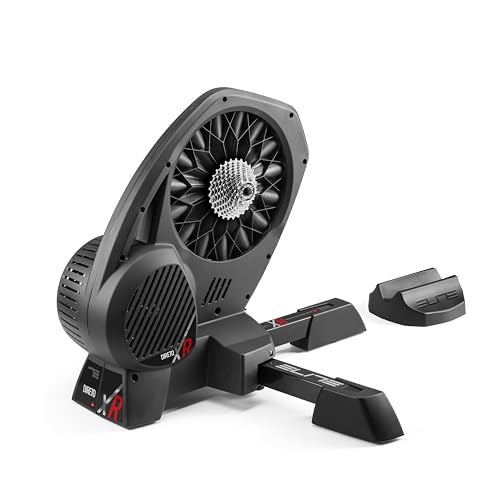
Elite SRL Direto XR
Best for: Precise power tracking and steep climbs
- Trainer Type
- Direct drive
- Max Simulated Incline
- 24%
- Power Accuracy
- ±1.5%
- Connectivity
- ANT+ FE-C, Bluetooth
- Resistance Type
- Electronic
- Bike Type
- Mountain
The Elite Direto XR is a direct drive smart trainer with electronic resistance. It offers ±1.5% power accuracy and simulates gradients up to 24%. It weighs 40 pounds and measures 20 by 20 by 30 inches. This unit connects via ANT+ FE-C and Bluetooth. It suits riders seeking precise data and steep climb simulation for structured workouts.
- ±1.5% power accuracy with optical torque sensor
- Simulates 24% simulated incline
- Direct drive electronic resistance
- Connects via ANT+ FE-C and Bluetooth
- Heavier at 40 pounds
- Larger footprint at 20 by 20 by 30 inches
- You want precise power data for tracking performance
- You need to simulate steep 24% climbs
- You use ANT+ FE-C or Bluetooth apps
- You prefer a lighter unit under 40 pounds
- You need a compact design smaller than 20 inches wide
- You require a cassette included in the box
Verdict: The Elite Direto XR Direct Drive Trainer fits riders who prioritize exact power metrics and steep gradient simulation over portability.
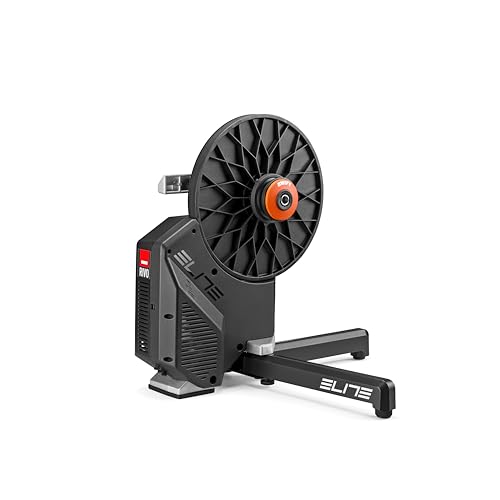
Elite Rivo Smart Trainer
Best for: riders prioritizing connectivity and foldable design
- Trainer Type
- Direct drive
- Max Power Output
- 2,100 watts
- Max Simulated Incline
- 18%
- Power Accuracy
- ±2.5%
- Connectivity
- WiFi, Bluetooth
- Virtual Shifting
- Zwift Cog and Click
The ELITE Rivo is a direct drive smart trainer featuring ±2.5% power accuracy and 2,100 watts max output. It simulates 18% climbs and uses WiFi and dual Bluetooth for app connectivity. The unit weighs 10 kilograms and folds for storage. It suits riders who want reliable data and virtual shifting without complex setup.
- ±2.5% power accuracy for consistent training data
- 18% simulated incline for realistic hill climbs
- WiFi and dual Bluetooth connectivity for app integration
- Foldable design with carry handle for easy storage
- 2,100 watts max power output for high intensity
- 10 kilograms weight is heavier than some compact trainers
- 18% max gradient is lower than the 24% incline of the Direto XR
- 2,100 watts max power is less than the Direto XR's capacity
- You want a direct drive trainer with reliable power accuracy
- You need WiFi connectivity for automatic firmware updates
- You prefer a foldable unit for easy home storage
- You require a 24% simulated gradient for steep climbs
- You need a trainer with higher than 2,100 watts max output
- You want the lightest possible direct drive option
Verdict: The ELITE Rivo Smart Trainer offers solid 18% gradient simulation and 2,100 watts of power for riders who value connectivity and portability over maximum incline or output capacity.
Specifications side by side
| Spec | Elite SRL Direto XR | Elite Rivo Smart Trainer |
|---|---|---|
| Trainer Type | Direct drive | Direct drive |
| Max Power Output | – | 2,100 watts |
| Max Simulated Incline | 24% | 18% |
| Power Accuracy | ±1.5% | ±2.5% |
| Connectivity | ANT+ FE-C, Bluetooth | WiFi, Bluetooth |
| Resistance Type | Electronic | – |
| Virtual Shifting | – | Zwift Cog and Click |
| Bike Type | Mountain | Folding |
| Color | Black | Black |
| Features | – | Foldable |
| Dimensions | 20 × 20 × 30 inches | 28.3 × 22.4 × 20.5 inches |
| Weight | 40 pounds | 10 kilograms |
| Size | One Size | – |
| Model | 110171013EXUE | – |
Frequently asked questions
Which Elite trainer is better for portability?
The Elite Rivo Smart Trainer is the better choice for riders who need to move their equipment frequently. It features a foldable design that makes storage and transport easier. The Direto XR is a fixed direct-drive unit that is heavier and less convenient to relocate. If you travel or have limited space, the Rivo’s compact nature is a significant advantage.
How do the weights of these two trainers compare?
There is a notable weight difference between the two models. The Elite SRL Direto XR weighs 40 pounds, making it a substantial piece of gym equipment. In contrast, the Elite Rivo Smart Trainer weighs 10 kilograms, which is approximately 22 pounds. The Rivo is significantly lighter, which contributes to its easier handling and portability compared to the heavier Direto XR.
Can the Elite Rivo simulate steep climbs?
Yes, the Elite Rivo Smart Trainer can simulate steep climbs, though with a lower limit than the Direto XR. It offers up to 18% gradient simulation. This is sufficient for most indoor training rides and hill intervals. However, if you require steeper inclines for specific mountain stage simulations, the Direto XR provides a higher maximum gradient of 24%.
What is the maximum power output of the Rivo?
The Elite Rivo Smart Trainer supports a maximum power output of 2,100 watts. This capacity allows it to handle high-intensity interval training and sprint efforts effectively. While the Direto XR is designed for precise power tracking, the Rivo’s 2,100-watt limit ensures it can manage the demands of most serious indoor cyclists without overheating or limiting output.
Is Bluetooth connectivity available on both models?
Yes, both trainers support Bluetooth connectivity for use with popular training apps. The Elite Rivo Smart Trainer explicitly lists Bluetooth as a key feature, allowing seamless pairing with your smartphone or tablet. The Direto XR also offers electronic resistance and app connectivity. This ensures you can use either trainer for structured workouts, virtual riding, and data tracking on your preferred software.
Which trainer is better for mountain bike training?
The Elite SRL Direto XR is better suited for mountain bike training. It is listed as a Mountain bike type trainer and offers a 24% climbing simulation. This steeper gradient capability mimics the intense ascents found in mountain terrain. The Rivo, while capable, tops out at 18%, which may not provide the same level of realism for steep mountain stages.

