
As Amazon Associates, we earn from qualifying purchases. This means we may receive a small commission at no extra cost to you if you click through and make a purchase.
As an Amazon Associate we earn from qualifying purchases. Links on this page are affiliate links.
Brake Type Explained for E-Bikes
When you look at an electric bike, the brake type explained section helps you understand stopping power. Most e-bikes use disc brakes. This system uses a metal rotor attached to the wheel hub. When you squeeze the lever, pads clamp onto the rotor. This creates friction to slow the bike down. Disc brakes work well in rain, mud, or snow. They are consistent and reliable for heavier vehicles.
You will often see hydraulic brakes listed alongside disc brakes. This refers to how the lever force is transferred. Hydraulic systems use fluid inside sealed lines. This design requires less hand strength to stop. It also offers better modulation. You can apply gentle pressure or hard stops with precision. Mechanical disc brakes use cables instead of fluid. They are easier to repair but may feel less smooth.
E-bikes are heavier than regular bikes. They carry extra weight from the battery and motor. This means you need stronger stopping power. Standard rim brakes often struggle with the added mass. Disc brakes handle the heat and force better. Hydraulic systems are common on higher-end models. They provide the control you need for steep descents.
Check the specifications carefully. Look for terms like hydraulic disc or mechanical disc. Hydraulic usually means better performance. It reduces the effort needed to stop quickly. This is important for safety. You want predictable braking in all weather. Poor brakes can lead to accidents. Always verify the brake type before buying.
The brake type explained guide shows that hydraulic disc brakes are the standard for quality e-bikes. They offer superior stopping power. This matters for your safety. Ensure the bike you choose matches your riding needs. Strong brakes give you confidence. They allow you to ride faster and safer. Always prioritize braking performance when selecting your electric bike.
Disc vs Hydraulic E-Bike Brakes
Disc Brakes
Disc brakes use a metal rotor attached to the wheel hub. When you squeeze the lever, brake pads clamp onto the rotor to slow the bike. This system works well in wet or muddy conditions because the rotor is exposed and clears debris easily. It provides consistent stopping power regardless of weather. The Aipas M1 Max Fat Tire E-Bike uses this type for robust braking on rough roads. You get reliable stopping power for steep hills. The trade-off is that mechanical discs require more hand force to achieve maximum pressure compared to hydraulic systems. They are also easier to maintain yourself. If you ride on varied terrain and want durability, disc brakes are a practical choice. They balance performance with simple maintenance for most riders.
Hydraulic Brakes
Hydraulic brakes use fluid-filled lines to transfer force from the lever to the brake caliper. This design requires less hand effort to stop the bike quickly. The modulation is smoother, allowing you to control speed precisely on descents. The Jasion Thunder 1800W Fat Tire E-Bike features hydraulic brakes for strong stopping power on fat tires. This is ideal for long-range riders who need confidence on varied terrain. Hydraulic systems also self-adjust for pad wear, maintaining performance over time. The trade-off is higher complexity and cost. Repairs often require specialized tools and knowledge. If you prioritize easy lever feel and precise control, hydraulic brakes are superior. They excel in off-road scenarios where traction management is critical for safety and performance during rides.
Is This Brake Setup Right For You
Who needs it
You need hydraulic disc brakes if you ride in wet, muddy, or hilly conditions. These brakes provide consistent stopping power with less hand fatigue. The hydraulic system uses fluid to transfer force from the lever to the caliper. This means you get strong braking with minimal lever pull. If you carry heavy cargo or ride at higher speeds, reliable stopping is critical. Disc rotors stay cleaner than rim brakes, so performance does not drop in rain. You will appreciate the modulation, which lets you control speed precisely on descents. If your commute involves steep hills or frequent stops, this setup reduces wear on your hands and improves safety. It is the best choice for serious riders who demand reliability in all weather.
Who can skip it
You can skip hydraulic disc brakes if you only ride on flat, dry paths. Mechanical disc brakes or rim brakes may suffice for casual use. They are lighter and easier to maintain. If you store your bike in a garage and rarely face mud, the extra cost and complexity of hydraulics may not be worth it. Consider prioritizing frame material, battery range, or motor power instead. These factors often impact daily usability more than brake type for light riders. Simple cable-actuated brakes are sufficient for low-speed neighborhood cruising. You do not need advanced modulation if you avoid steep terrain. Focus on comfort, fit, and total weight. For many casual riders, these elements matter more than high-performance stopping systems. Keep it simple if your riding is infrequent and gentle.
Brake Glossary for E-Bikes
Disc Brake
A system using a metal rotor on the wheel hub and pads that clamp down to slow the bike. This design offers reliable stopping power in various weather conditions.
Hydraulic Brake
Brakes that use fluid to transfer force from the lever to the caliper. This setup provides consistent stopping power with less hand fatigue, ideal for hilly or wet terrain.
Mechanical Brake
Brakes that use a cable to pull the pads against the rotor. These are generally easier to maintain but may require more lever force compared to hydraulic systems.
Caliper
The component that holds the brake pads and squeezes them against the rotor. It is the moving part of the brake assembly that creates friction to stop the wheel.
Rotor
A metal disc attached to the wheel hub. The brake pads clamp onto this rotating surface to create the friction needed to slow down or stop the electric bike.
Brake Lever
The handle you squeeze on the handlebar to engage the brakes. It initiates the process of applying pressure to the pads, either via cable or hydraulic fluid.
Pad
Small blocks of material that press against the rotor. These wear down over time and need replacement to maintain effective stopping power and safety for your e-bike.
| # | Product | Best for | Price |
|---|---|---|---|
| 1 | Aipas M1 Max 52V 1800W Fat Tire | rough terrain and steep hill climbing | |
| 2 | Jasion Thunder 26" Fat Tire Ebike | long-range riders needing strong braking on fat tires | |
| 3 | AVDLBIKE 16" Fat Tire E-Bike | compact urban commuting with reliable brakes | |
| 4 | Fweork 16" Fat Tire Electric Dirt Bike | off-road trails requiring hydraulic braking | |
| 5 | TotGuard 27.5" Mountain Ebike | riders needing reliable mechanical disc brakes | |
| 6 | LEONX M2 Pro Fat Tire E-Bike | Off-road riding on loose or uneven terrain |
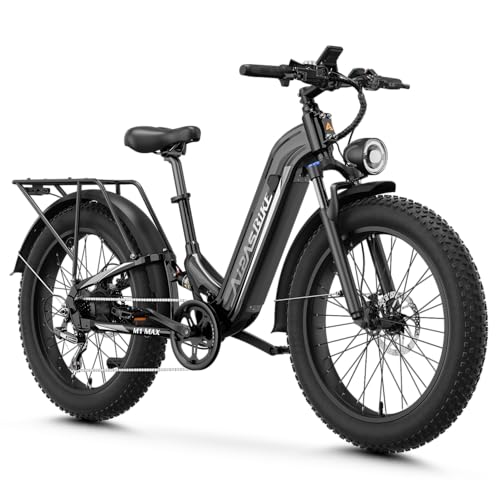
Aipas M1 Max 52V 1800W Fat Tire
Best for: rough terrain and steep hill climbing
- Brake Type
- Disc Brakes
- Motor Power
- 1800W Peak
- Battery Capacity
- 18Ah
- System Voltage
- 52V
- Maximum Range
- Up to 85 miles
- Tire Size
- 26" x 4.0"
The Aipas M1 Max is a 26-inch fat tire e-bike built for stability and power. It features an 1800W peak motor and 110Nm of torque for strong hill climbing. The hydraulic dual disc brakes provide reliable stopping power, while the air rear suspension absorbs rough terrain. With an 18Ah battery offering up to 85 miles of range, it suits riders seeking comfort and control on varied surfaces.
- Hydraulic dual disc brakes with carbon-ceramic pads
- 1800W peak motor with 110Nm torque
- Air rear suspension with 250 PSI adjustability
- 52V 18Ah removable battery for up to 85 miles
- 26" x 4.0" fat tires for all-terrain traction
- Heavier build at 88 pounds compared to lighter city e-bikes
- Lower top speed than high-performance dirt bikes like the Fweork
- Fewer gear speeds with a 7-speed system versus multi-speed options
- You need strong braking power on steep or uneven terrain
- You ride on loose surfaces like sand, snow, or gravel
- You want adjustable suspension comfort for long rides
- You prioritize lightweight portability for easy storage
- You need high-speed performance for highway commuting
- You prefer a rigid frame for maximum efficiency
Verdict: Aipas M1 Max Fat Tire E-Bike delivers robust braking and suspension for riders who tackle rough roads. It is an ideal fit for those who value stability and stopping power over speed and light weight.

Jasion Thunder 26" Fat Tire Ebike
Best for: long-range riders needing strong braking on fat tires
- Brake Type
- Hydraulic Brakes
- Motor Power
- 1800W peak
- Battery Capacity
- 18Ah (864Wh)
- System Voltage
- 48V
- Maximum Range
- Up to 80 miles
- Top Speed
- 30+ mph
The Jasion Thunder is a fat tire electric bike designed for adults who need power and range. It features a 1800W peak motor and a large 864Wh removable battery. The hydraulic disc brakes provide reliable stopping power, achieving a controlled stop in just 2 seconds. With a top speed over 30 mph and a range up to 80 miles, it suits long commutes or off-road adventures. The 26×4 inch tires offer stability on various surfaces.
- 1800W peak motor delivers 85N·m of torque for hill climbing
- 864Wh removable battery supports up to 80 miles of range
- Dual hydraulic disc brakes ensure fast, controlled stopping
- 26×4 inch fat tires provide traction on sand, snow, and streets
- UL certification adds a layer of safety assurance
- Front suspension only, lacking rear shock absorption found on some competitors
- Top speed is limited to over 30 mph, lower than the 35-40 mph range of other bikes on the list
- You need a high-capacity battery for long-distance riding
- You ride on loose surfaces like sand or snow
- You prefer hydraulic braking for consistent stopping power
- You require full suspension for rough terrain comfort
- You need a top speed exceeding 30 mph
- You prefer a lighter, smaller frame for easy storage
Verdict: Jasion Thunder 1800W Fat Tire E-Bike fits riders who prioritize range and braking power over speed and full suspension. It is a solid choice for those tackling varied terrain on longer trips.

AVDLBIKE 16" Fat Tire E-Bike
Best for: compact urban commuting with reliable brakes
- Brake Type
- Disc Brakes
- Motor Power
- 500W (Peak 1000W)
- Battery Capacity
- 12.8Ah (460Wh)
- System Voltage
- 36V
- Maximum Range
- Up to 45 miles
- Top Speed
- 20 mph
This AVDLBIKE e-bike uses dual disc brakes for reliable stopping power on varied terrain. It features a 500W motor with a 1000W peak output and a 12.8Ah removable battery. The 16-inch fat tires provide stability and traction. You get a top speed of 20 MPH and a range of up to 45 miles. The full suspension system absorbs bumps for a smoother ride. This model is designed for adults and teens seeking a compact, stable ride.
- Dual disc brakes for consistent stopping performance
- 12.8Ah removable battery for flexible charging
- Full front and rear suspension for comfort
- 16×3 inch fat tires for stability
- Three riding modes including throttle assist
- 20 MPH top speed is lower than many competitors
- 16-inch wheel size limits stability on rough ground
- 45-mile range is modest compared to larger batteries
- You need reliable disc brakes for city commuting
- You prefer a compact frame for storage
- You want a removable battery for easy charging
- You require speeds above 20 MPH
- You need a long-range battery for all-day trips
- You prefer standard 26-inch or 27.5-inch wheels
Verdict: AVDLBIKE 16" Fat Tire E-Bike suits riders who prioritize braking reliability and a compact build. It is ideal for shorter commutes where stability and ease of charging matter more than high speed or long range.
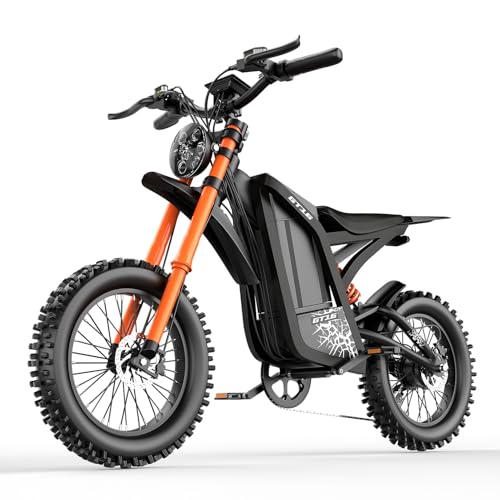
Fweork 16" Fat Tire Electric Dirt Bike
Best for: off-road trails requiring hydraulic braking
- Brake Type
- Hydraulic Brakes
- Motor Power
- 5500W peak
- Battery Capacity
- 30Ah (1800Wh)
- System Voltage
- 60V
- Maximum Range
- 100 miles
- Top Speed
- 40 mph
This Fweork dirt bike uses a 5500W peak motor and 60V 30Ah battery to reach 40 MPH. It features 16-inch fat tires and full suspension for rough terrain. The standout spec is its hydraulic dual-disc braking system, which offers precise stopping power. This setup suits riders needing off-road capability and strong torque for steep climbs or loose surfaces.
- Hydraulic dual-disc brakes for reliable stopping
- 5500W peak motor with 220N.m torque
- Full suspension with nitrogen-powered mid shock
- 16×3 inch puncture-resistant fat tires
- Removable 60V 30Ah battery for 100-mile range
- 16-inch wheels are smaller than the 26-inch or 27.5-inch options on this list
- 40 MPH top speed is lower than the 1800W models that reach higher speeds
- 365 lbs weight capacity is less than the larger adult bikes listed
- You need hydraulic brakes for confident control on steep, slippery descents
- You want to ride on loose surfaces like sand or snow
- You prefer a dedicated dirt bike geometry for off-road trails
- You require a standard city bike with larger wheels for pavement
- You need a top speed exceeding 40 MPH
- You prefer a lighter frame for easier transport
Verdict: Fweork F30 16" Fat Tire Dirt Bike delivers heavy-duty off-road performance with hydraulic brakes and a powerful motor. It fits riders who prioritize traction and stopping power on unpaved trails over pavement speed.

TotGuard 27.5" Mountain Ebike
Best for: riders needing reliable mechanical disc brakes
- Brake Type
- Disc Brakes
- Motor Power
- 500W
- Battery Capacity
- 499Wh
- System Voltage
- 48V
- Top Speed
- 19.8 mph
- Tire Size
- 27.5"
This TotGuard electric bike features a 500W motor and a 48V 499Wh battery. It uses dual disc brakes for stopping power. The 27.5-inch tires and lockable aluminum suspension fork handle rough roads. You get 21-speed gears and an LCD display. It suits adults who want a reliable mountain-style ride with clear stats and safe braking.
- Dual disc brakes for reliable stopping power
- 500W motor with 48V 499Wh battery
- 21-speed gears for terrain control
- Lockable aluminum suspension fork
- Top speed is 19.8 mph, lower than many peers
- Battery capacity is 499Wh, less than higher-end options
- You need dual disc brakes for consistent stopping
- You prefer 27.5-inch tires for stability
- You want a lockable front suspension fork
- You need speeds over 20 mph
- You require a battery larger than 500Wh
- You want hydraulic brakes instead of mechanical discs
Verdict: TotGuard 27.5" 500W Adult Ebike fits riders who prioritize mechanical disc brake reliability and moderate range over high speed. It is a solid choice for daily commuting on varied terrain.

LEONX M2 Pro Fat Tire E-Bike
Best for: Off-road riding on loose or uneven terrain
- Brake Type
- Disc Brakes
- Motor Power
- 1800W peak
- Battery Capacity
- 17.5Ah
- System Voltage
- 48V
- Maximum Range
- 85 miles
- Tire Size
- 26" x 4.0"
The LEONX M2 Pro is a 90-pound fat tire electric bike built for off-road stability. It uses dual disc brakes for reliable stopping power on varied terrain. The 1800W peak motor delivers 110Nm of torque, helping you climb slopes up to 30 degrees. With a 48V 17.5Ah battery, you can travel up to 85 miles on pedal assist. This full suspension model suits riders who need traction on rugged trails.
- Dual disc brakes provide consistent stopping power in rain or mud.
- 1800W peak motor offers strong acceleration and 110Nm of torque.
- Full suspension system absorbs bumps on rough off-road surfaces.
- 26-inch by 4.0-inch fat tires ensure excellent traction on loose ground.
- The 90-pound weight is heavier than many standard electric bikes, making transport difficult.
- The 17.5Ah battery capacity is lower than the 20Ah+ options available on some competitors.
- The 1800W peak motor is less powerful than the 5500W peak motor found on the Fweork model.
- You ride on loose surfaces like sand, snow, or gravel.
- You need strong braking performance for steep downhill descents.
- You want a full suspension setup for comfort on bumpy trails.
- You prioritize lightweight portability for carrying up stairs.
- You need the highest possible motor power for extreme hills.
- You primarily ride on smooth paved city streets.
Verdict: The LEONX M2 Pro Fat Tire Ebike fits riders who prioritize off-road traction and reliable disc braking over lightweight portability. Its full suspension and high-torque motor make it a solid tool for rugged trails rather than casual commuting.
Specifications side by side
| Spec | Aipas M1 Max 52V 1800W Fat Tire | Jasion Thunder 26" Fat Tire Ebike | AVDLBIKE 16" Fat Tire E-Bike | Fweork 16" Fat Tire Electric Dirt Bike | TotGuard 27.5" Mountain Ebike | LEONX M2 Pro Fat Tire E-Bike |
|---|---|---|---|---|---|---|
| Motor Power | 1800W Peak | 1800W peak | 500W (Peak 1000W) | 5500W peak | 500W | 1800W peak |
| Battery Capacity | 18Ah | 18Ah (864Wh) | 12.8Ah (460Wh) | 30Ah (1800Wh) | 499Wh | 17.5Ah |
| System Voltage | 52V | 48V | 36V | 60V | 48V | 48V |
| Maximum Range | Up to 85 miles | Up to 80 miles | Up to 45 miles | 100 miles | – | 85 miles |
| Top Speed | – | 30+ mph | 20 mph | 40 mph | 19.8 mph | – |
| Tire Size | 26" x 4.0" | 26 x 4" | 16 x 3" | 16" x 3" | 27.5" | 26" x 4.0" |
| Brake Type | Hydraulic dual disc | Dual hydraulic disc | Dual disc | Hydraulic dual-disc | Dual disc | Dual disc |
| Suspension | Air rear suspension | Front suspension | Full suspension | Full suspension | Lockable aluminum suspension fork | Dual suspension |
| Bike Type | Fat Tire, Mountain, Step-Through | Fat Tire | Fat Tire, Mountain | Dirt Bike | Mountain | Fat Tire, Mountain |
| Target Audience | Adults | Adults | Adults | Adults, Teens | Adults | Adults |
| Wheel Size | – | – | 16 Inch | 16 Inch | – | – |
| Voltage | 52V | – | 36V | 60V | 48V | 48V |
| Color | Black | Gunmetal Gray | Pink | Black | Red | Black |
| Suitable For | – | – | Commuting | Off-Road | – | Off-Road |
| Features | – | Removable Battery | Removable Battery | Dual Suspension, NFC Unlock | Removable Battery | Dual Suspension |
| Tire Type | Fat Tires | Fat Tires | Fat Tires | – | – | Fat Tires |
| Frame Type | Step-Thru | – | – | – | – | – |
| Dimensions | 80 × 26 × 44 inches | – | – | – | – | 80 × 26 × 44 inches |
| Weight | 88 pounds | – | – | – | – | 90 pounds |
| Size | M1 Max | 26''x4'' | 16‘’ A13 ebike with Lock | Large | 27.5" | M2 Pro – Step-Over |
| Model | – | Thunder | – | F30 | – | – |
Frequently asked questions
Do all e-bikes have disc brakes?
Most modern electric bikes use disc brakes. This includes models like the Aipas M1 Max and the TotGuard 27.5" Mountain Ebike. These bikes rely on a metal rotor and pads for stopping power. However, some older or budget models might use rim brakes. You should check the specifications to confirm the brake type before buying.
Are hydraulic brakes better than mechanical disc brakes?
Hydraulic brakes generally offer more consistent stopping power with less hand effort. The Jasion Thunder and Fweork F30 use hydraulic systems. Fluid transfers force from the lever to the caliper efficiently. Mechanical disc brakes, found on the TotGuard 27.5", are reliable but may require more lever pull. Hydraulic systems are often preferred for hilly or wet terrain.
Which brake type is best for steep hills?
Hydraulic brakes are ideal for steep hills due to their modulation and power. The Jasion Thunder and Fweork F30 fit riders needing strong braking on slopes. They provide consistent performance without excessive hand fatigue. Mechanical disc brakes, like those on the TotGuard 27.5", also work well but require more maintenance. Choose hydraulic for maximum control on descents.
How do disc brakes handle wet weather?
Disc brakes perform well in wet conditions because the rotor is away from the tire. Water splashes less onto the braking surface. The Aipas M1 Max and LEONX M2 Pro use disc brakes for this reliability. Hydraulic systems, like on the Fweork F30, maintain power even when wet. This makes them safer for all-weather commuting and trail riding compared to rim brakes.
Do fat tire bikes need special brakes?
Fat tire bikes benefit from robust disc brakes due to their weight. The Aipas M1 Max and Jasion Thunder both use disc or hydraulic systems. These brakes handle the extra mass of fat tires and riders. Hydraulic brakes on the Jasion Thunder offer strong stopping power. Mechanical disc brakes on the AVDLBIKE provide reliable stopping for compact urban commuting on heavier frames.
Is maintenance easier on mechanical or hydraulic brakes?
Mechanical disc brakes are often easier to maintain. You can adjust cables with basic tools. The TotGuard 27.5" uses mechanical disc brakes for this simplicity. Hydraulic brakes, like those on the Fweork F30, require bleeding and specialized fluids. They offer better performance but need more expertise for repairs. Choose mechanical if you prefer DIY maintenance and hydraulic for performance.


