As Amazon Associates, we earn from qualifying purchases. This means we may receive a small commission at no extra cost to you if you click through and make a purchase.
Maintaining high-speed 3D printers requires a calculated approach to mechanical friction, surface wear, and motor load. Creators running multi-day print queues quickly discover that selecting the right bambu lab grease and oil makes the difference between flawless layer stacking and severe motion artifacts. High-acceleration toolheads exert continuous shear stress on linear rods, lead screws, and drive gears. Choosing between a fluid penetrating oil and a high-tack synthetic grease depends entirely on the specific mechanical assembly you are servicing, the operating temperatures of the toolhead chamber, and how prone a component is to gathering ambient airborne debris during long jobs.
The catalog of dedicated lubricants is organized around two mechanical delivery formats: liquid maintenance oils and specialized synthetic greases. Fluid oils are engineered for high capillary migration along polished guide rails and idler pulleys, freeing up tight tolerances and flushing out oxidized metal fines without introducing viscous drag. Heavy paste formulations are packaged in tubes designed for high-load lead screws and drive gears where mechanical pressure would quickly squeeze out a low-viscosity liquid. Understanding how each package addresses corrosion resistance, thermal stability, and applicator control allows hobbyists and studio operators to choose the correct compound for their scheduled printer overhaul.
This guide by the numbers
9.0/10
Best rated model
Our highest score in this line-up
3
Models on file
Models in this guide that have a stored product record
2
Brands involved
Distinct brand names on the product records used here
Prices and specifications come from the stored Amazon listing data for the products in this article. Scores are out of 10, based on listed specifications and buyer feedback.
Bambu Lab Lubricants Lineup at a Glance
| Product | Form | Packaging | Intended Mechanical Use |
|---|---|---|---|
| 3D Printer Grease | Grease | 6-pack tubes with fine-tip nozzles | Axis, guide rods, lead screws, drive gears |
| Lubricant Oil for Bambu Lab 3D | Oil | 3-pack bottles (30 ml total) | Linear rails, hinges, pulleys, gunk removal |
| 3D Printer Part High Performance Synthetic | Synthetic Grease | 6-pack tubes (10 ml each) | Optical axes, drive gears, guide rails |
The Models in Detail
01
3D Printer Grease

3D Printer Grease
Best for: Lead screw maintenance and noise reduction
Pros
- Fine-tip nozzle applicator
- Odorless and non-toxic
- Water-resistant protective layer
Cons
- Attracts airborne dust
- Too viscous for light rails
3D Printer Grease is a dedicated mechanical paste packaged in a multi-tube format specifically tailored for indoor workshop environments. The manufacturer, Moxikison, supplies this lubricant in a pack of six portable tubes, each integrated with an extended fine-tip nozzle designed for precise targeted placement. This mechanical grease is formulated to eliminate stiction, squeaks, and abrasive grinding sounds across linear rods, drive gears, and threaded lead screws. Because high-speed toolhead motion generates intense friction across motion components, this formulation deposits a persistent, water-resistant protective film that shields bare metal from oxidation while extending the intervals between scheduled cleanings.
In creator spaces and enclosed studios, chemical off-gassing is a primary concern during extended production runs. This product is formulated to be non-toxic, odorless, and completely free of irritating fumes or harsh additives, making it safe for continuous use in small maker spaces, home offices, and classrooms. By lowering physical resistance along moving components, this bambu lab maintenance grease helps prevent the mechanical binding that frequently causes sudden layer shifts, dimensional inaccuracies, and surface banding. The compact tube dimensions prevent air exposure and contamination, ensuring that the remaining supply stays fresh in a tool drawer between maintenance cycles.
This model is best suited for creators operating enclosed CoreXY machines such as the X1-Carbon or P1S, where threaded Z-axis rods require a dense, clinging compound that will not migrate under vibration. The integrated fine-tip applicator allows users to place small beads of grease directly into the root of threaded screws without overspraying or contaminating nearby belts. However, this dense grease is not suitable for light-load sliding surfaces or small idler bearings, where an ultra-thin oil is required to prevent viscous drag from overworking the stepper motors.
02
Lubricant Oil for Bambu Lab 3D

Lubricant Oil for Bambu Lab 3D
Best for: Linear rail cleaning and rust prevention
Pros
- Loosens sticky residues
- Corrosion inhibitor formula
- Three convenient bottles
Cons
- Low 138 F flash point
- Requires frequent reapplication
Lubricant Oil for Bambu Lab 3D provides a fluid maintenance solution packaged in a set of three squeeze bottles holding a combined volume of 30 milliliters (1.01 fluid ounces). Manufactured by RRtronics Creations LLC, this low-viscosity liquid is explicitly targeted at mechanical components across the Bambu Lab A1 and A1 mini platforms. Unlike thick paste greases, this oil features penetrating properties that loosen frozen rust-to-metal bonds, free up sticky sliding mechanisms, and lower surface drag across high-speed rollers, guide rails, pulleys, and small pivot hinges. With a stated flash point of 138 degrees Fahrenheit, the chemical structure remains active under standard ambient maker temperatures.
Beyond standard lubrication, this oil serves an active dual-action cleaning purpose in your maintenance workflow. The chemical formulation actively dissolves and lifts away dried grease residues, grime, gum, adhesive residue, and factory transit grease from bare metal surfaces. Applying this liquid before an overhaul allows operators to purge hardened buildup from linear bearings before redepositing a clean, moisture-resistant barrier. For users comparing options in a comprehensive bambu lubricant oil for 3d printer guide, this fluid offers rapid capillary flow along steel guide rails, ensuring protective coverage without manual spreading.
This oil model is the ideal choice for cantilever bedslingers and exposed linear rails where thick greases tend to trap airborne filament dust and carbon fibers. Users running continuous high-speed jobs on an A1 or A1 mini will appreciate how quickly the fluid penetrates tight tolerances to quiet down squeaking bearings. However, this oil gives way to heavier synthetic grease when servicing heavy vertical lead screws, as fluid oil will gradually drain downward under gravity and require far more frequent reapplication.
03
3D Printer Part High Performance Synthetic
3D Printer Part High Performance Synthetic
Best for: High-load gears and optical axes
Pros
- Non-drip synthetic paste
- Generous six-tube supply
- Wide hardware compatibility
Cons
- Lacks fine needle tip
- Manual spreading needed
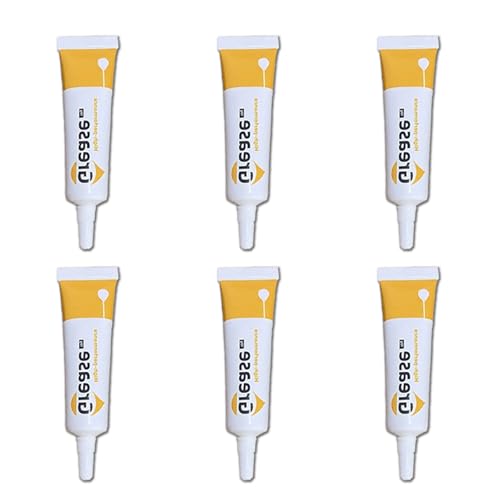
3D Printer Part High Performance Synthetic is a heavy-duty synthetic paste supplied by SAHVAIM in a high-capacity six-pack configuration, with each tube containing 10 milliliters of product. Formulated specifically for high-speed motion assemblies, this synthetic paste delivers robust anti-wear and anti-rust protection across mechanical optical axes, steel guide rails, and internal extruder gears. The chemical composition is thoroughly inspected to be non-toxic, odorless, and environmentally safe, providing peace of mind when applied to machines running inside living areas or shared production studios.
The primary mechanical advantage of this synthetic formulation is its extreme structural stability under thermal and mechanical shear. The paste is engineered with a delicate, cohesive consistency that does not flow, drip, melt, or separate under the sustained heat of enclosed build chambers. This ensures that the compound stays locked directly onto gear teeth and vertical rods rather than slinging outward onto internal electronics or settling onto the lower chassis. While handling maintenance, creators should take care not to transfer greasy residues from their hands onto a clean bambu build plate, which could ruin first-layer adhesion during subsequent prints.
This synthetic grease suits professional print farm operators and high-volume creators who need an enduring lubricant that withstands hundreds of continuous print hours without breaking down. Its resistance to dripping makes it particularly valuable for high-load planetary gears, extruder feeder assemblies, and optical motion rods. Conversely, users who only need to clean and protect open linear slide rails will find this thick synthetic paste unnecessarily viscous, making a low-viscosity maintenance oil a more efficient alternative for light-duty sliding assemblies.
Matching a Model to Your Setup
- High-Speed CoreXY Lead Screws: Choose 3D Printer Grease when servicing the triple Z-axis threaded rods on enclosed machines, as its fine-tip nozzle allows precise bead placement without contaminating nearby motion belts.
- Exposed A1 and A1 Mini Linear Rails: Choose Lubricant Oil for Bambu Lab 3D to lubricate the high-speed guide rails and idlers on open-frame printers, ensuring low friction without collecting abrasive airborne debris.
- Extruder Gearboxes and High-Load Optical Axes: Choose 3D Printer Part High Performance Synthetic when coating internal drive gears and ground steel axes that demand a non-drip, thermally stable barrier that resists slinging.
- Deep Mechanical Cleaning and Degreasing: Choose Lubricant Oil for Bambu Lab 3D when reviving sticky mechanisms or stripping away old, hardened factory grease before applying fresh protective coatings.
- Shared Maker Spaces and Enclosed Classrooms: Choose 3D Printer Grease or 3D Printer Part High Performance Synthetic when servicing machines in unventilated rooms, thanks to their certified non-toxic and odorless formulations.
Before You Buy
Before purchasing maintenance supplies, review the specific physical limitations of your machine and what these retail packages omit. None of the listed packages include lint-free microfiber cleaning cloths, isopropyl alcohol wipes, or specialized application swabs. Applying fresh grease or oil directly on top of contaminated, dust-laden rods accelerates mechanical wear by grinding fine particles into bearing raceways. You will need to supply your own cleaning rags to thoroughly strip the rods prior to lubricating.
Additionally, the listings do not specify exact mechanical viscosity ratings, NLGI consistency grades, or base oil chemistry (such as mineral, silicone, or fluoropolymer bases). While all three products are designated as safe for desktop 3D printer mechanics, they are not formulated for carbon-fiber rods, which require dry cleaning rather than wet lubricants. Always inspect your machine documentation to verify which motion axes utilize steel ball bearings versus self-lubricating polymer bushings before dispensing any chemical compound.
FAQ
What is the difference between printer grease and printer oil?
Grease is a high-viscosity paste formulated with thickeners that keep the lubricant anchored to vertical lead screws and gear teeth under high mechanical pressure. Oil is a low-viscosity liquid that flows freely into tight bearing tolerances and linear rail tracks, offering low rolling resistance and active cleaning action.
Can I use liquid oil on my vertical Z-axis lead screws?
Liquid oil can temporarily lubricate lead screws, but it tends to run down the vertical threads under gravity and pool at the base of the machine. Thick grease is the recommended choice for vertical screws because it clings to the threads and stays in place across hundreds of print hours.
How often should I lubricate my printer motion components?
Most manufacturers recommend inspecting and cleaning motion components every two to three months, or roughly every 300 to 500 hours of active printing. High-dust environments and continuous production schedules may require more frequent maintenance to prevent stiction and audible grinding.
Are these lubricants safe to use around pets and children?
The listings specify that these greases are non-toxic, odorless, and free of harsh chemicals, making them safe for home studios and maker spaces. However, you should always store lubricant containers out of reach of children and wash your hands thoroughly after servicing mechanical hardware.
Will grease sling off my gears onto the print bed?
High-performance synthetic greases are formulated with strong surface cohesion to prevent melting, dripping, or slinging during high-speed operation. Applying a controlled, thin layer rather than an excessive buildup ensures the compound remains locked inside gear teeth and rod channels.